

The ambition of COSMICS is to develop a modeling platform around molecular spintronics and general concepts for efficient strategies to optimize the magneto-transport properties of materials and devices.
COSMICS is the result of a collaboration between chemists, experimental physicists and theorists from France (CEA/Université Paris Cité), Denmark (DTU, Synopsis), Germany (University of Kiel) and Spain (University of Valencia).
This project has received funding from the European Union under the “Horizon 2020” research and innovation program.
A European project driven by modelling
Cosmics was born from a collaboration between European experimentalists and theorists, specialists of molecular spintronics. It brings together six teams of physicists and chemists, including a software development company.
The COSMICS project is driven by theoretical and computational modelling. It aims at providing state-of-the-art and user-friendly modelling tools to a broad scientific academic and industrial community. COSMICS’ ambition is to develop a modelling platform around molecular spintronics and general concepts for efficient strategies to allowing to optimize the magneto-transport properties of materials and devices.
An interdiscipinary approach
The project is based on an interdisciplinary collaboration that involves expertise from theory-modelling groups, a software company, as well as experimental physicists and chemists. The approach will be to set up the basis for new spin-based nano-devices paradigms and materials with robust and enhanced properties that will fuel new ideas in the field of molecular spintronics.
Concepts and Tools in Molecular Spintronics
The novelty of the project is to combine and develop the most up to date modelling tools with cutting-edge well-controlled and calibrated experimental methods in order to unravel the fundamental mechanisms governing the magneto-transport properties in molecular spintronic systems. The modelling tools developed will further be integrated as a molecular spintronic toolkit into a user-friendly software proposed by a fast growing software company specialized in developing digital applications for the atomistic simulations of materials for technology development.
Have you ever heard about electron spin and its role in magnetism?
How can we use magnetic molecules and play with their spins?
How can we integrate magnetic molecules into electronic components?
How can quantum modeling help us understand existing materials and design new ones?
Find the answers in the video :
Project members : Cyrille Barreteau, coordinator – Service de physique de l’État condensé (CEA), Amandine Bellec – Laboratoire Matériaux et Phénomènes Quantiques (Université Paris Cité), Mads Brandbyge – DTU Physics, Troels Markussen – Synopsys Denmark, Eugenio Coronado & José Antonio Real – The Institute of Molecular Science (University of Valencia), Richard Berndt & Manuel Gruber – STM Group (University of Kiel).
Read more

Earth Day: Putting Science at the Heart of Planetary Balance
22 April marks Earth Day: for this occasion Université Paris Cité is taking action to highlight the importance of better understanding and protecting our planet. Between scientific breakthroughs and open conferences, this day is the opportunity to share thoughts and...
Understanding Psychiatric Disorders: Wafa Ghoul’s Research Journey Between Paris and Toronto
At the Paris Institute of Psychiatry and Neuroscience (IPNP), where researchers work collaboratively to better understand how the brain functions, Wafa Ghoul is one of a new generation of scientists seeking to shed light on the origins of psychiatric disorders through...
Academic matchmaking: Co-creating joint courses for Circle U.

World Health Day 2026
April 7 is World Health Day, for this occasion Université Paris Cité reaffirms its long-standing commitment for an innovative and equal health. Ranked first in France for several years across the six health-related fields of the Shanghai Ranking, the university stands...
![[FIRE Call for applications] Meet our PhD students FIRE!](https://www-test.u-pariscite.fr/wp-content/uploads/2026/04/Sans-titre-1920-x-1080-px111-1080x675.png)
[FIRE Call for applications] Meet our PhD students FIRE!
The Frontières de l’Innovation en Recherche et Éducation (FIRE) Doctoral School is an international and interdisciplinary PhD program accredited by the Université Paris Cité (UPCité) and co-accredited by the Université Paris Sciences et Lettres (PSL).
FIRE welcomes students who are passionate about contributing to Planetary Health and the implementation of the Sustainable Development Goals (SDGs). It hosts research projects that often fall outside the scope of traditional doctoral schools due to their unconventional and cross-disciplinary nature. We interviewed three of our PhD students, who shared their thesis topics, explained why they chose the FIRE doctoral school, and offered advice for the next cohort. Lire la suite [FIRE Call for applications] Meet our PhD students FIRE!
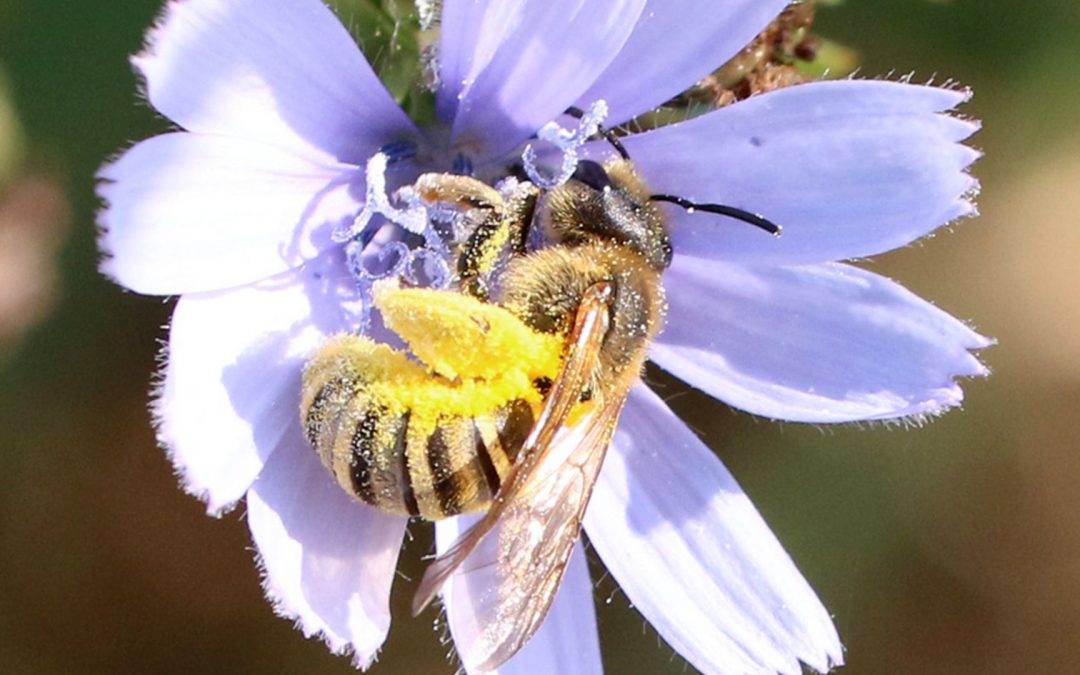
One in ten European bee species at risk, new biodiversity warning
The new european red list of bees published on February 26th catalogs almost 2000 species and draws a worrying observation that 172 species in Europe are now endangered. 10 years after a first partial assessment, our understanding of the situation has become much...

Research Call for Proposals 2026 Université Paris Cité – University of Toronto
As part of the strategic partnership between Université Paris Cité (UPCité) and the University of Toronto (U of T), a new research call for proposals is launched for 2026. The submission deadline is May 13, 2026. Two previous calls were held in 2024 and 2025, with a...

A new feature produced by RFI with the support of Université Paris Cité: ‘Décalages culturels’
The radio program ‘8 milliards de voisins’ is now broadcasting ‘Décalages culturels’, a new RFI feature, produced in partnership with Université Paris Cité and spearheaded by its Educational Innovation Hub (PIP). Décalages culturels: exploring interculturality...
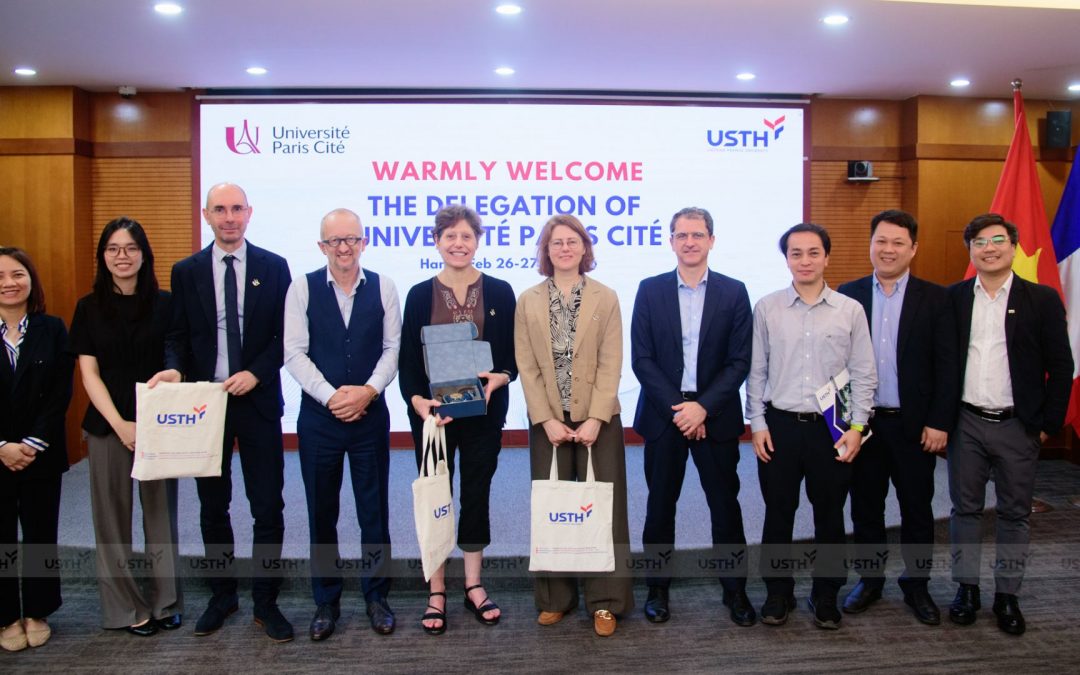
Université Paris Cité strengthens its alliances in Asia
From Vietnam to Singapore, including the APAIE exhibition in Hong Kong, a delegation from Université Paris Cité recently traveled to Asia to meet several strategic partners on the continent: the University of Science and Technology of Hanoi (USTH) and the National...
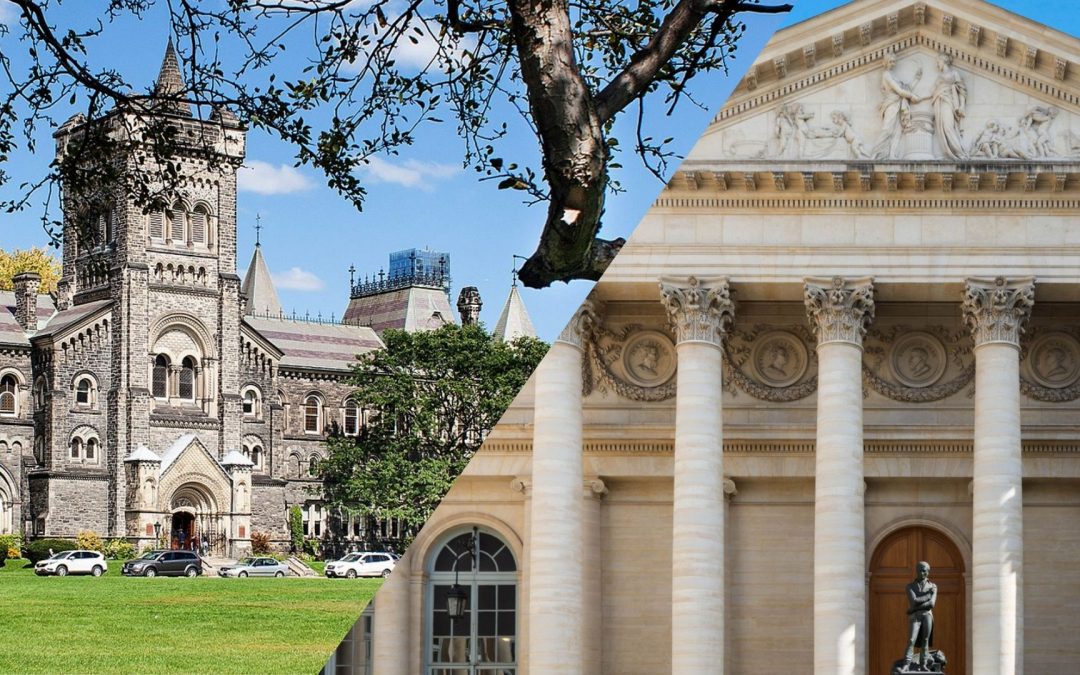
2026 Doctoral Mobility Award Program between The University of Toronto and Université Paris Cité
The doctoral mobility award program between Université Paris Cité (UPCité) and its privileged partner, the University of Toronto (U of T), is open from Friday, March 13 to June 1, 2026. The objectives Université Paris Cité and the University of Toronto are launching a...