

Teams from the renal transplantation department at Necker-Enfants malades hospital, Inserm and Université Paris Cité, as part of the Paris Translational Research Center for Organ Transplantation (PARCC), coordinated by Dr. Olivier Aubert and Prof. Alexandre Loupy, conducted a study into the potential of liquid biopsy (cfDNA) as a technique for predicting renal transplant rejection. This involves detecting donor DNA in the blood of transplant patients, with the aim of non-invasively predicting rejection of the transplanted organ. The results of this study were published in Nature Medicine on June 2, 2024.
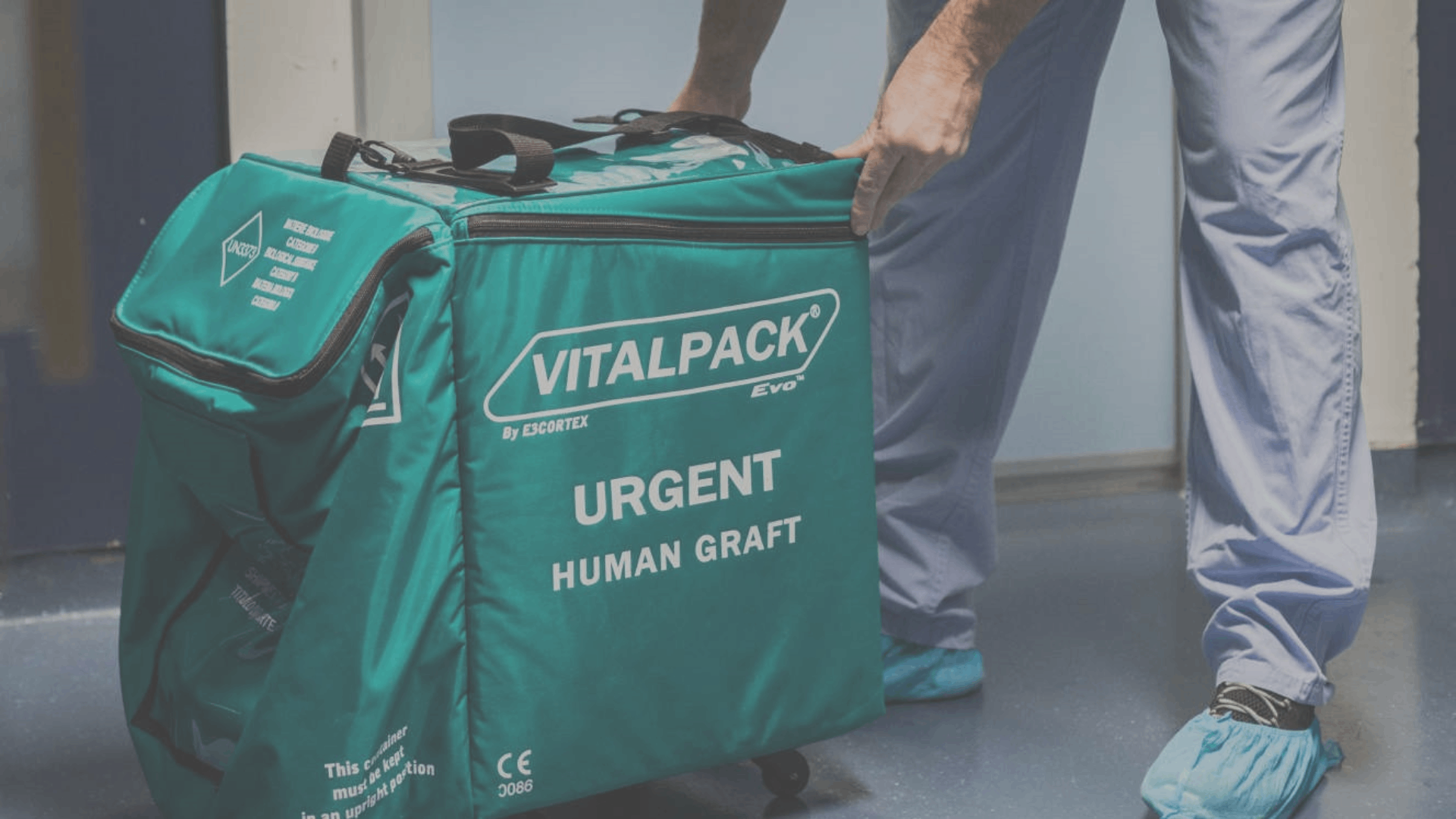
© Tous droits réservés
Allografts are the most commonly performed transplants, between two genetically different individuals of the same species. An allograft is when the patient (or recipient) is transplanted with cells from a healthy person. Allograft rejection is a significant public health issue, affecting the patient’s quality of life in many ways, even leading to death. Allograft rejection affects almost 20% of patients within a year.
The objective of this study is to demonstrate the usefulness of liquid biopsy for kidney transplant patients. This technique involves detecting donor DNA in the blood of transplant patients, with the aim of non-invasively predicting rejection of the transplanted organ.
The study included nearly 3,000 kidney transplant patients from 14 transplant centers in Europe and the United States, all aged around 55, with a majority of men (61%). cfDNA is integrated into a multimodal prediction algorithm¹. cfDNA² levels were found to be strongly associated with different types of graft rejection, including antibody-mediated rejection and T-cell-mediated cellular rejection.
With this method, researchers will be able to determine for each patient and non-invasively on a simple blood test, the probability of rejection of the transplanted organ. Furthermore, the analyses revealed that the addition of cfDNA to existing monitoring models not only improves detection of clinical rejection, but also of sub-clinical rejection (undetectable with currently available tools), enabling earlier and more effective therapeutic interventions.
Liquid biopsy, combining the usual graft monitoring parameters with cfDNA, avoids unnecessary and invasive biopsies, while detecting rejection earlier and with greater accuracy. This approach can also reduce healthcare costs while considerably simplifying the care pathway for transplant patients. This non-invasive method offers a new way of monitoring transplant patients. Today, the liquid biopsy approach is also being extended to heart, lung and liver transplant patients.
- A type of artificial intelligence in which multiple data sources and numerous intelligent processing algorithms are combined to solve complex problems and achieve greater accuracy.
- cfDNA levels indicate the intensity of inflammation and rejection of the transplanted organ.
Source
Cell-free DNA for the detection of kidney allograft rejection
Olivier Aubert, Cindy Ursule-Dufai, Romain Brousse, Juliette Gueguen, Maud Racapé, Marc Raynaud, Elisabet Van Loon, Angelica Pagliazzi, Edmund Huang, Stanley C Jordan, Kenneth D Chavin, Gaurav Gupta, Dhiren Kumar, Tarek Alhamad, Sanjiv Anand, Jorge Sanchez-Garcia, Basmah A Abdalla, Julien Hogan, Rouba Garro, Darshana M. Dadhania, Pranjal Jain, Didier A Mandelbrot, Maarten Naesens, Raja Dandamudi, Vikas R. Dharnidharka, Dany Anglicheau, Carmen Lefaucheur, Alexandre Loupy –
Read more

Earth Day: Putting Science at the Heart of Planetary Balance
22 April marks Earth Day: for this occasion Université Paris Cité is taking action to highlight the importance of better understanding and protecting our planet. Between scientific breakthroughs and open conferences, this day is the opportunity to share thoughts and...
read more
Understanding Psychiatric Disorders: Wafa Ghoul’s Research Journey Between Paris and Toronto
At the Paris Institute of Psychiatry and Neuroscience (IPNP), where researchers work collaboratively to better understand how the brain functions, Wafa Ghoul is one of a new generation of scientists seeking to shed light on the origins of psychiatric disorders through...
read more
World Health Day 2026
April 7 is World Health Day, for this occasion Université Paris Cité reaffirms its long-standing commitment for an innovative and equal health. Ranked first in France for several years across the six health-related fields of the Shanghai Ranking, the university stands...
read more![[FIRE Call for applications] Meet our PhD students FIRE!](https://www-test.u-pariscite.fr/wp-content/uploads/2026/04/Sans-titre-1920-x-1080-px111-1080x675.png)
[FIRE Call for applications] Meet our PhD students FIRE!
The Frontières de l’Innovation en Recherche et Éducation (FIRE) Doctoral School is an international and interdisciplinary PhD program accredited by the Université Paris Cité (UPCité) and co-accredited by the Université Paris Sciences et Lettres (PSL).
FIRE welcomes students who are passionate about contributing to Planetary Health and the implementation of the Sustainable Development Goals (SDGs). It hosts research projects that often fall outside the scope of traditional doctoral schools due to their unconventional and cross-disciplinary nature. We interviewed three of our PhD students, who shared their thesis topics, explained why they chose the FIRE doctoral school, and offered advice for the next cohort. Lire la suite [FIRE Call for applications] Meet our PhD students FIRE!