

The results of the MSCA Staff Exchange 2023 call for proposals were published on May 28 2024. Université Paris Cité congratulates its two winners, Sylvain Chaty, Professor and Vice President for Culture, Science and Society at the AstroParticle and Cosmology Laboratory (APC), research unit (UMR 7164), and Delia Kesner, Professor at the Institut Recherche en Informatique Fondamentale research unit (UMR 8243).
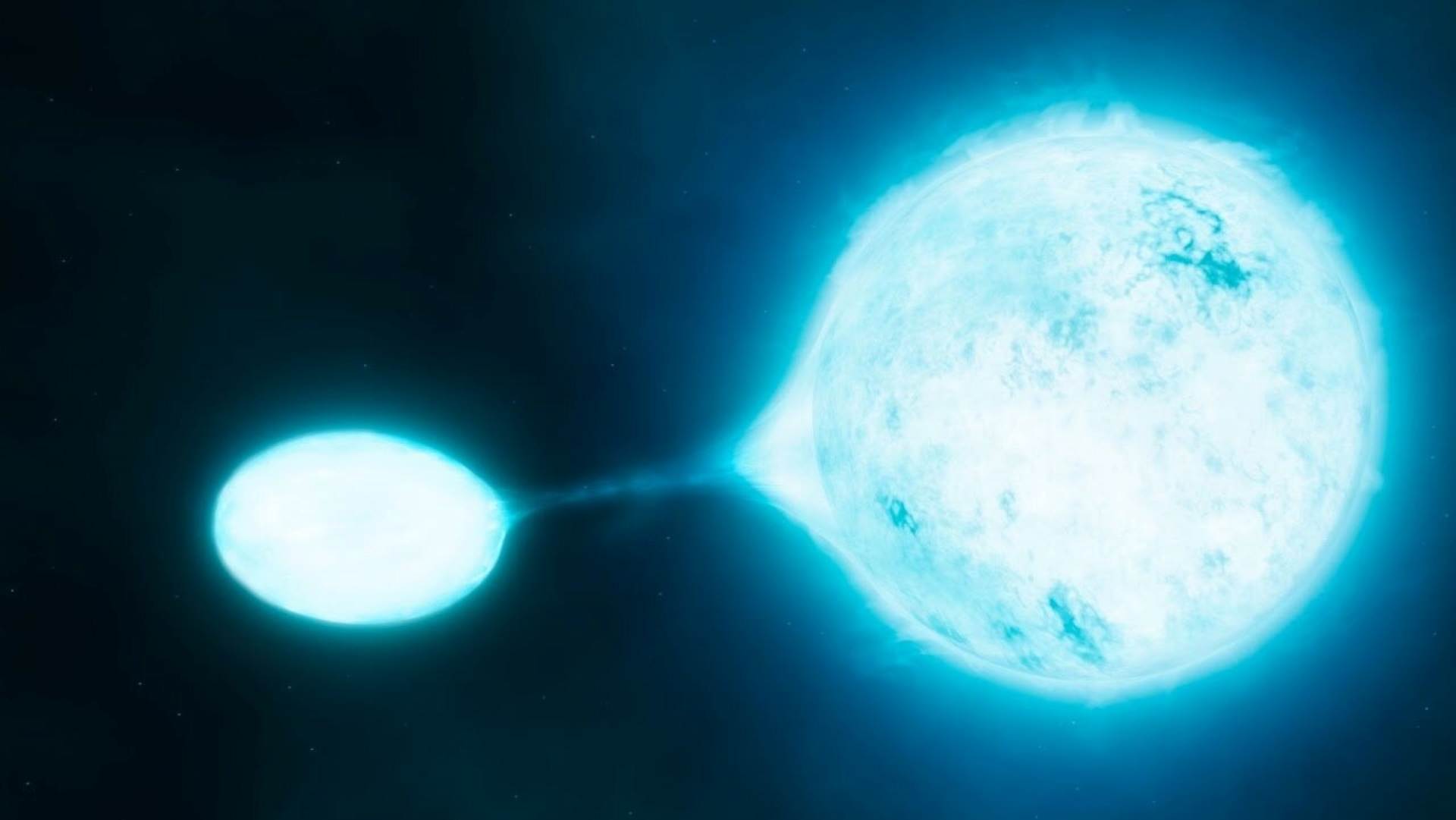
Projet OCEANS : Overcoming challenges in the evolution and nature of massive stars, Sylvain Chaty
Massive stars are the cornerstone of the dynamic and chemical evolution of the universe. They enrich it as they evolve, with some of their matter ejected by energetic winds. Despite their importance, the evolution of massive stars, from their birth to their death in spectacular supernova explosions, still hides many mysteries. This is due to crucial gaps in our knowledge, particularly of the physical processes taking place inside stars and their atmospheres, as well as the mutual influence of paired stars, i.e. stars orbiting each other. The ultimate goal of the OCEANS project, coordinated by Professor Sylvain Chaty at Université Paris Cité, is to elucidate the physical properties and evolution of massive stars, as well as their contribution to the emission of gravitational waves generated by the merger of neutron stars and/or black holes. The results obtained will not only provide a better understanding of the evolution of massive stars, but will also produce major advances in related fields such as galaxy evolution and the evolution of the universe.
To achieve this, the OCEANS project is setting up a multidisciplinary, international network of researchers on the European and American continents, with expertise in various disciplines and experience in theory and observations.
“We will exploit public data archives and develop machine-learning algorithms to detect massive stars in binary and multiple systems,” says Sylvain Chaty. “The aim is to classify them, and create statistically significant samples at various stages of their evolution,” continues the project coordinator.
In OCEANS, researchers, PhD students and post-docs will develop signal processing methods for analyzing stellar properties, and numerical codes to reveal the impact of stellar interaction and matter ejection on the evolution of stars.
Most of the work will be carried out by doctoral and post-doctoral students, trained in modern observation and data analysis techniques, machine learning algorithms and high-performance computing techniques. In particular, the project will aim to equip them with excellent skills for their future careers.
“We will organise schools, workshops and educational activities aimed at sharing knowledge and disseminating our results, while making major breakthroughs and broadening Europe’s leadership role in fundamental research,” explains Sylvain Chaty.
Project QCOMICAL – Quantum Computing and its Calculi, Delia Kesner
Quantum computers are based on the principles of quantum mechanics, and use quantum bits (qbits) rather than bits as the basic unit of information. Like Schrödinger’s cat, each quantum bit can be in a superposition of 0 and 1 at the same time. Using quantum properties such as superposition and entanglement, quantum computers and quantum algorithms can perform complex calculations. Quantum computers are more powerful than traditional computers, but also more difficult to programme.
The QCOMICAL project aims to investigate the theory, principles and formalisms needed to design quantum programming languages to ensure that quantum programs work as intended. In addition, the project will study real-world models of linear photonic quantum computing, which allow information to be transmitted via photons. QCOMICAL aims to encourage new developments in the theory of quantum programming languages. The project aims to foster new interactions between participants and achieve substantial advances beyond the current state of knowledge in quantum computing.
The consortium includes partners from Argentina (Universidad Nacional de Quilmes, Universidad de Buenos Aires), Uruguay (Universidad de la República), France (Aix-Marseille Université, Université de Lorraine, Université Grenoble Alpes, Université Paris-Est Créteil, Université Paris-Saclay) and Italy (Università di Pisa, Università degli Studi di Urbino Carlo Bo, Università degli Studi di Cagliari).
Did you know?
Marie Sklodowska Curie Actions Staff Exchanges programme finances collaborative projects and promotes staff mobility between consortium members. The calls are “bottom-up”; all research themes are eligible. In addition to the OCEANS & QCOMICAL projects, Université Paris Cité is coordinating Guillaume Patanchon’s CMB-Inflate project.
Learn more >
Would you like to find out more about MSCA Staff Exchange calls for projects, or more generally about funding opportunities?
Contact your local support teams > intranet
Read more

Earth Day: Putting Science at the Heart of Planetary Balance
22 April marks Earth Day: for this occasion Université Paris Cité is taking action to highlight the importance of better understanding and protecting our planet. Between scientific breakthroughs and open conferences, this day is the opportunity to share thoughts and...
read more
Understanding Psychiatric Disorders: Wafa Ghoul’s Research Journey Between Paris and Toronto
At the Paris Institute of Psychiatry and Neuroscience (IPNP), where researchers work collaboratively to better understand how the brain functions, Wafa Ghoul is one of a new generation of scientists seeking to shed light on the origins of psychiatric disorders through...
read more
World Health Day 2026
April 7 is World Health Day, for this occasion Université Paris Cité reaffirms its long-standing commitment for an innovative and equal health. Ranked first in France for several years across the six health-related fields of the Shanghai Ranking, the university stands...
read more![[FIRE Call for applications] Meet our PhD students FIRE!](https://www-test.u-pariscite.fr/wp-content/uploads/2026/04/Sans-titre-1920-x-1080-px111-1080x675.png)
[FIRE Call for applications] Meet our PhD students FIRE!
The Frontières de l’Innovation en Recherche et Éducation (FIRE) Doctoral School is an international and interdisciplinary PhD program accredited by the Université Paris Cité (UPCité) and co-accredited by the Université Paris Sciences et Lettres (PSL).
FIRE welcomes students who are passionate about contributing to Planetary Health and the implementation of the Sustainable Development Goals (SDGs). It hosts research projects that often fall outside the scope of traditional doctoral schools due to their unconventional and cross-disciplinary nature. We interviewed three of our PhD students, who shared their thesis topics, explained why they chose the FIRE doctoral school, and offered advice for the next cohort. Lire la suite [FIRE Call for applications] Meet our PhD students FIRE!