

Translational Bioinformatics
The Graduate School of Translational Bioinformatics is dedicated to the training by and for research of students in bioinformatics and data mining in life and medical sciences.

Presentation
The Graduate School of Translational Bioinformatics education programme aims to provide the required knowledge, but also practical experience to their students who will apply for jobs in the field of genomic medicine. The Graduate School of Translational Bioinformatics also provides biologists and medical staff with continuing education in new methods in omics and data science.
Supported by interdisciplinary research teams and projects, the programme benefits from in-depth theoretical training and scientific support. The Graduate School of Translational Bioinformatics also relies on the strong link and structuring synergy between Université Paris Cité’s Faculties of Science and of Health.
Context and ambition
Since the so-called “omics” revolution, life and medical sciences have been intimately complex. Thanks to the advent of high-throughput sequencing and the development of bioinformatics methods, the relationships between genotype, phenotype and beyond are better deciphered and understood. The large amount and diversity of data obtained from omics technologies pose new technical and analytical challenges to extract biologically and clinically relevant information. These advances open up exciting opportunities for the development of new diagnostic tools in the context of “personalised medicine”.
In order to meet these challenges, the Graduate School of Translational Bioinformatics offers an interdisciplinary programme that brings together basic scientific disciplines, namely: biology, applied mathematics, computer science, physics and chemistry as well as medical and pharmaceutical sciences. The programme is supported by a wide range of master’s degrees coupled with a strong partnership, between experts who belong to research and medical centres from different fields.
In addition to the current master’s courses, this programme offers…
- New courses in medicine and life sciences to provide medical students with a solid background and skills in mathematics, statistics and computer science. A set of lectures is also offered, to provide key knowledge to students in computer science and data science for better understanding and appropriate response to questions in medicine and biology.
- An interdisciplinary PhD programme to support PhD projects requiring complementary expertise, for example mathematics and medical sciences, computer science and biology or health. This programme allows to train more students and, more importantly, provides them with dedicated content more suited to this new, wider audience.
- Project-based learning and teaching. In addition to the theoretical training, a large part of the learning is devoted to applied data science projects related to biological and medical issues (e.g.: problem-solving approach). The projects focus on data directly provided by the central in situ facilities. This learning aims at developing the most effective bioinformatics tools to answer original and challenging questions posed by field research teams.
Contact
Catherine ETCHEBEST
catherine.etchebest@inserm.fr
Antonio RAUSELL
antonio.rausell@institutimagine.org
Masters
The Graduate School of Translational Bioinformatics is mainly supported by the master’s programmes in “Bioinformatics”, “Engineering, Mathematics and Biostatistics”, “Mathematics, Modelling and Machine Learning”, and “AIRE”.
Master’s programmes taught in French and English:
Master‘s programmes taught in English:
Research
In terms of laboratories and research institutes, the Graduate School of Translational Bioinformatics benefits from a vast network of laboratories associated to the master’s programmes and more generally to the Faculties of Health and of Science. In addition, the François Jacob Institute of biology, housing the largest central facility in high-throughput sequencing, and the National Centre of Human Genomics Research are key players in hosting and training students.
The participation of Imagine Institute’s clinical bioinformatics laboratory is of major importance to provide expertise in methodological developments dedicated to clinical data. The Labex GREX, which brings together the largest teams in France working on red blood cells, also supports this programme. International laboratories, such as the Institute for Research in Immunology and Cancer (IRIC) in Montreal or the CHU University Research Centre in Quebec-Laval are also associated to the Graduate School of Translational Bioinformatics.
Some of our laboratories…
- BFA – Functional and Adaptive Biology (UMR 8251)
- BIGR – Integrated Red Blood Cell Biology (UMRS 1134)
- CNRGH – National Center of Human Genomics Research
- Imagine Institute – Clinical Bioinformatics Lab
- IRIC – Institute for Research in Immunology and Cancer of the Université de Montréal
- LBT – Laboratory of Theoretical Biochemistry (UPR 9080)
- MAP5 – Mathématiques Appliquées à Paris 5
- The Research Center – CHU de Québec Université Laval
Executives
- Catherine ETCHEBEST
Director of the Graduate School of Translational Bioninformatics - Antonio RAUSELL
Director of the Graduate School of Translational Bioninformatics
À lire aussi

Découvrez les résultats de l’édition 2025 de l’appel à projet CCE
Dans le cadre du projet structurant FIRE-UP, l’appel à projets Crossing Cutting Edges (CCE) soutient chaque année des projets de recherche interdisciplinaires de pointe. Pour l’édition 2025, 40 candidatures éligibles ont été évaluées et 11 projets se sont vu attribuer...
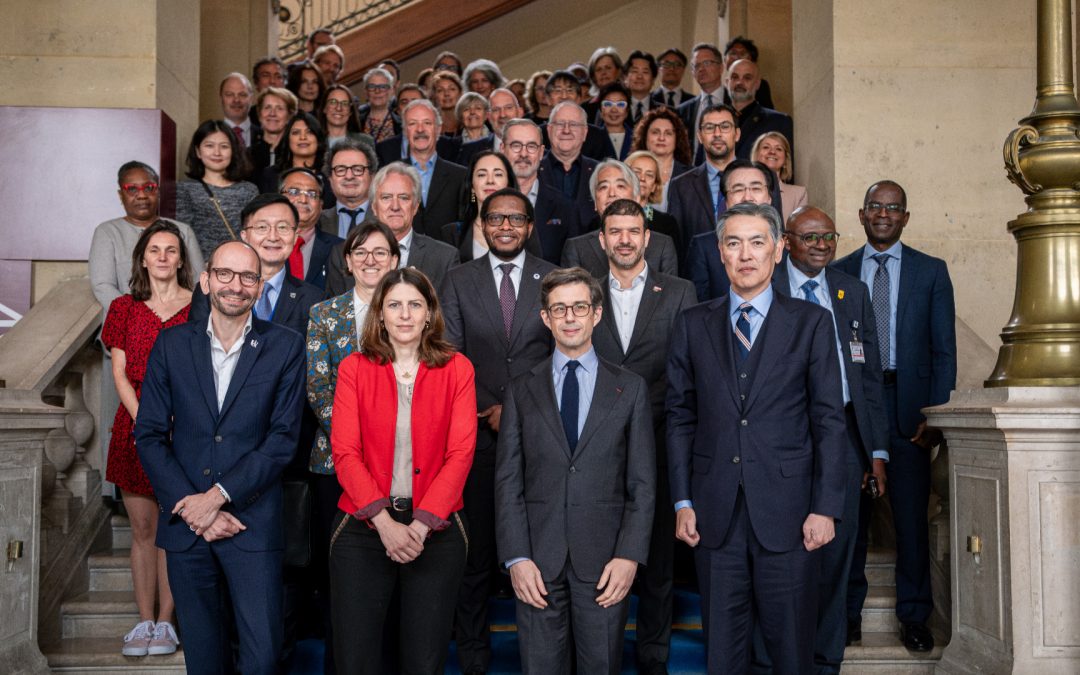
Sommet U7+ 2026 : quand la voix des universités éclaire l’agenda du G7
Sept ans après son lancement lors du G7 de Biarritz, l’Alliance U7+ est revenue à Paris les 14 et 15 avril pour un sommet présidentiel placé sous le signe de la responsabilité sociale des universités. Co-organisé par l’Université Paris Cité, l’École polytechnique et...
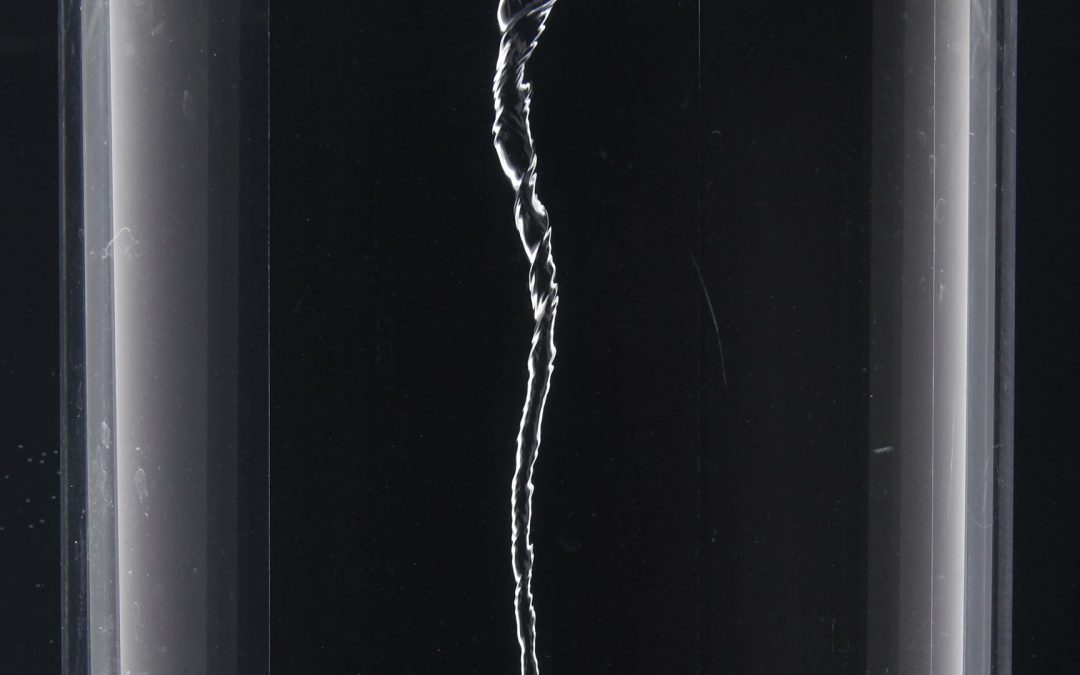
Les ondes de Kelvin : des tourbillons quantiques aux tornades géophysiques

Earth Day: Putting Science at the Heart of Planetary Balance
22 April marks Earth Day: for this occasion Université Paris Cité is taking action to highlight the importance of better understanding and protecting our planet. Between scientific breakthroughs and open conferences, this day is the opportunity to share thoughts and...