

Earth Planets Universe
The Graduate School of Earth Planets Universe aims to train professionals in the fields of geosciences and astrophysics, astroparticle and cosmology.
The Graduate School offers several Masters courses and PhD progammes in fundamental and applied physics, risks and environment, and planetary sciences. It brings together 100 researchers and over 400 students from the Institut de Physique du Globe de Paris and the Astroparticle and Cosmology laboratory, all part of the UniversEarth initiative.
Presentation
Experts in various disciplinary fields; from geosciences and astrophysics to space sciences; are gathered in the Graduate School of Earth Planets Universe to share methods and technologies, allowing them pursue common goals and research interests.
The Graduate School of Earth Planets Univers trains students to become leading engineers and scientists in the study of complex natural systems, using physics, chemistry, long-term observations and big data streams.
Our research training focuses on innovation and we aspire to offer students a growing share of “courses without borders”, in partnership with renowned international universities and laboratories. For instance, the Master programme SPACE was created in 2009 in partnership with the university of Science and Technology of Hanoi.
Website
www.univearths.fr
Contact
Contact form
Address
Institut de Physique du Globe de Paris
1, rue Jussieu
75238 Paris cedex 05
Phone
+33 (0)1 83 95 74 34
Masters
This programme is opened to students with a solid background in physics, chemistry, mathematics, computer science or geology and offers cutting edge training in geosciences, combining quantitative and observational analysis methods.
Two specialisation options are available:
The first year of these programmes covers statistical physics, high energy physics, atomic physics, condensed matter physics, astrophysics. The second year (M2) programmes will allow you to specialise in different fields such as astroparticle, astrophysics, cosmology, particle physics and theoretical physics.
List of Masters taught in French and English:
- Fundamental physics and applications:
- Physics Master of the Centre International de physique fondamentale
- Risks and the environment:
Research
Laboratories
Earth, planetary and environmental sciences are gaining considerable momentum in modern society. Today, more than ever, we need to understand and predict the evolution of our planet. Chemistry, physics, geology and mathematics are used to analyze and understand changes in the solar system. They allow us to address challenges in various fields, such as understanding telluric risks, prospecting and managing natural resources, the impact of human activities on biogeochemical cycles, etc.
These questions are studied at the Institut de Physique du Globe de Paris (IPGP, UMR 7154), in charge of the observation services in volcanology, seismology, magnetism, gravimetry and erosion. Involved in the study of the planets in the solar system, the Institute offers powerful means of calculation, massive data processing capacity, and an analytical platform unique in France, along with the cutting edge experimental facilities.
The AstroParticle and Cosmology Laboratory (APC, UMR 7164)is interested in research in the Science of the Universe, in particular cosmology, gravitation, high-energy astrophysics and particle physics. In collaboration with the French space agency (CNES), the APC laboratory plays an important role in the deployment of deep learning techniques, in the analysis of data – on the ground and in space – but also in the design, construction and validation of space tools.
The Astrophysics, Instrumentation and Modeling Laboratory (AIM, UMR 7158) is one of the largest space laboratories in the world. In direct collaboration with the CNES, AIM is heavily involved in the space missions of European Space Agency scientific program on Cosmic Vision.
Doctoral schools
The doctoral school Earth, Environmental Sciences and Physics of the Universe of Paris (STEP’UP, DS 560) covers a vast scientific scope, which ranges from the geosciences and planetology to astrophysics, astroparticle physics and cosmology. Over 50 PhD students graduate each year from the School. Applications to join the PhD programme can be submitted from December to June.
Executives
Steering Committee Members:
- Yvonne Becherini
Director of the Graduate School of Earth Planets Universe - Guillaume Le Hir
Head of IPGP Master’s programs - Antoine Kouchner
Deputy Director of the APC laboratory and Vice-President for International Relations, Université Paris Cité - Julien Siebert
Member of the management team of the STEP’UP doctoral school - Matthias Gonzalez
Deputy Director of the AIM research unit, responsible for Université Paris Cité-related aspects
À lire aussi

Découvrez les résultats de l’édition 2025 de l’appel à projet CCE
Dans le cadre du projet structurant FIRE-UP, l’appel à projets Crossing Cutting Edges (CCE) soutient chaque année des projets de recherche interdisciplinaires de pointe. Pour l’édition 2025, 40 candidatures éligibles ont été évaluées et 11 projets se sont vu attribuer...
Sommet U7+ 2026 : quand la voix des universités éclaire l’agenda du G7
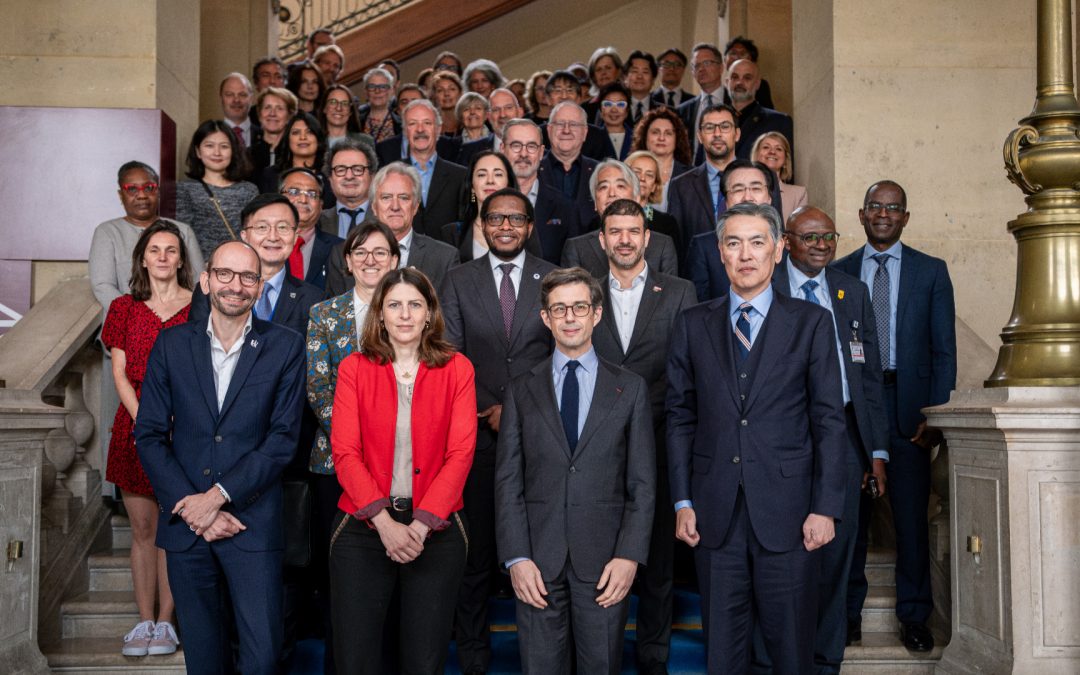
Sept ans après son lancement lors du G7 de Biarritz, l’Alliance U7+ est revenue à Paris les 14 et 15 avril pour un sommet présidentiel placé sous le signe de la responsabilité sociale des universités. Co-organisé par l’Université Paris Cité, l’École polytechnique et...
Les ondes de Kelvin : des tourbillons quantiques aux tornades géophysiques
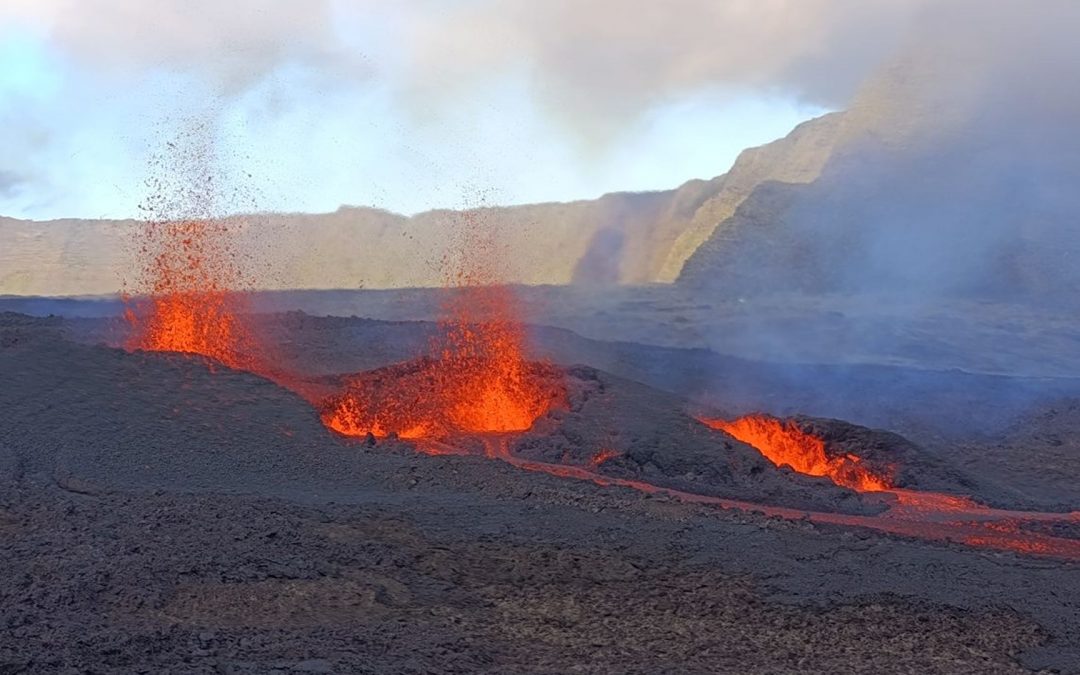
Earth Day: Putting Science at the Heart of Planetary Balance
22 April marks Earth Day: for this occasion Université Paris Cité is taking action to highlight the importance of better understanding and protecting our planet. Between scientific breakthroughs and open conferences, this day is the opportunity to share thoughts and...