

Following the success of the first xenotransplantation of a pig kidney into a human patient in August 2023, significant advances have been made thanks to the molecular analyses conducted by the teams at the Paris Institute for Transplantation and Organ Regeneration (PITOR) of Université Paris Cité, led by Professor Alexandre Loupy. PITOR, a European leader in organ transplantation and regeneration, has been selected to host the BANFF 2024 international conference, co-organized by Professors Carmen Lefaucheur and Alexandre Loupy. This conference will mark the establishment of the first BANFF classification for xenograft rejection.
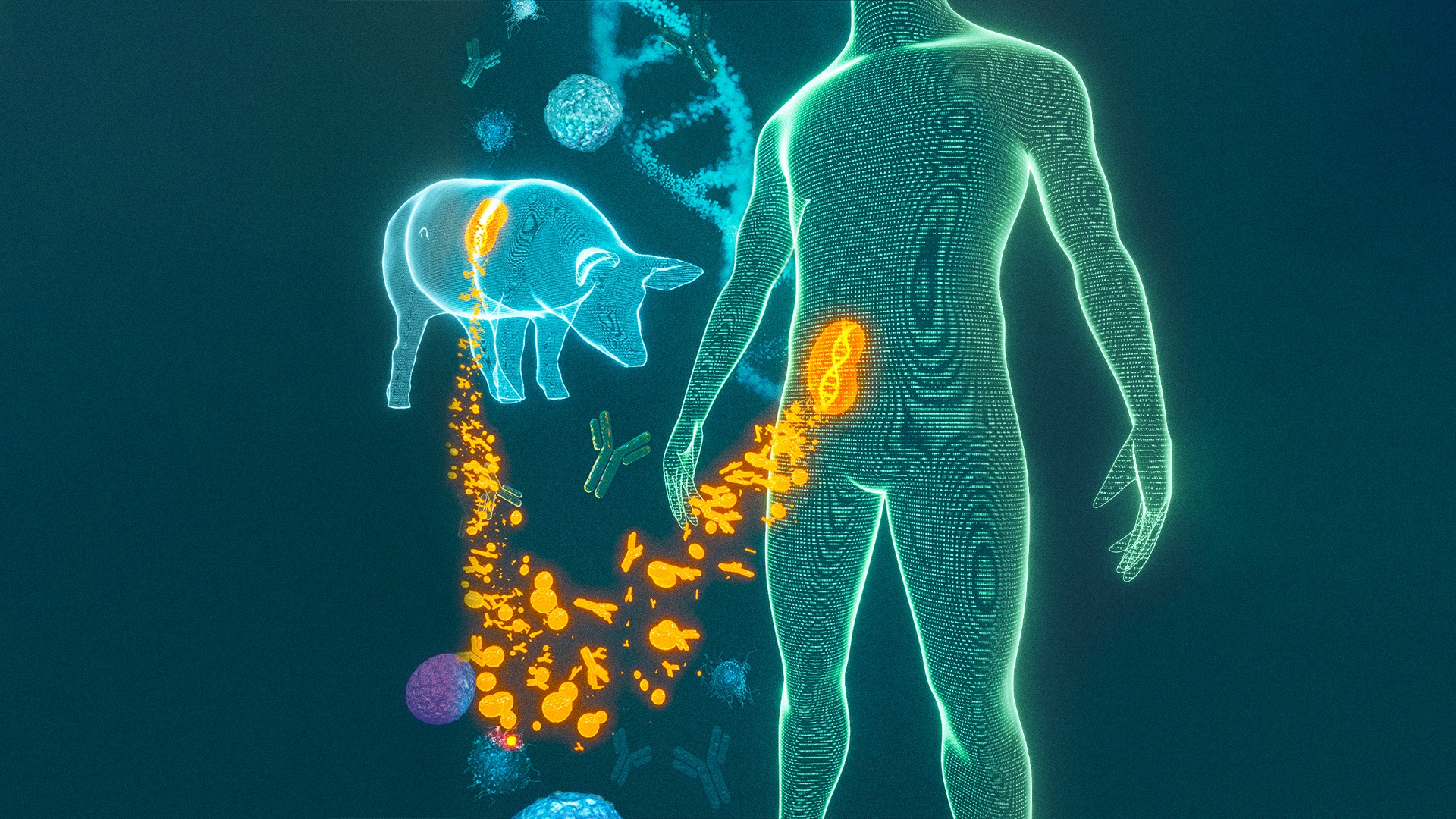
Xénotransplantation
© Alexandre Loupy
The conference will open on September 16, 2024, at the National Academy of Medicine and will continue from September 17 to 20 at the Université Paris Cité headquarters.The inclusion of xenografts in the international BANFF classification is a world first. This classification of graft rejection, based on internationally developed and validated criteria, is a crucial step towards the standardization and advancement of xenotransplantation, a revolutionary practice in medicine.
The PITOR Institute at Université Paris Cité, recognized as a European leader in organ transplantation and regeneration, has been chosen to host this international conference. This event provides a unique opportunity to showcase the excellence of French research and medical innovation.
Global experts in organ transplantation, along with the editors-in-chief of the six leading international scientific journals-The Lancet, The New England Journal of Medicine (NEJM), Journal of the American Society of Nephrology (JASN), Kidney International, American Journal of Transplantation (AJT), and Transplant
International—will be present in Paris from September 16 to 20, 2024. The prestigious venues of the National Academy of Medicine and the headquarters of Université Paris Cité in the heart of Paris will serve as the setting for this major global event.
PITOR – The 29 research units and teams, along with the clinical services gathered within the PITOR Institute (Paris Institute for Transplantation and Organ Regeneration), conduct their research based on four major areas: understanding and treating organ rejection (kidney, heart, lung, liver, pancreas, and composite tissues) by addressing pathophysiological mechanisms to optimize therapeutic management of patients; diagnosis and monitoring by developing innovative tools to transform the care pathway for transplant patients. The institute also focuses on optimizing, allocating, and preserving organs by developing innovative approaches based on artificial intelligence. Finally, part of their work involves regenerative medicine, through the creation of organs, organoids, and organs-on-chips, in order to provide new tools and products to create, refurbish, or replace organ tissues. https://paristransplantgroup.com/
Read more
Université Paris Cité in the spotlight for the 75th edition of the Lindau Nobel Laureate Meetings
For the 2026 edition, three young talents from Université Paris Cité have been selected to take part in the prestigious Lindau Nobel Laureate Meetings in Lindau, Germany. This is a unique opportunity for Federica Namor, Marie Robert and Luca Ferrini to engage with...
read more![[Paris-NUS] 2026 Calls for Project Results and Awarded Projects](https://www-test.u-pariscite.fr/wp-content/uploads/2026/04/2017-BTC-Signage-3-V2-2-1-1080x675.jpg)
[Paris-NUS] 2026 Calls for Project Results and Awarded Projects
Building on its privileged partnership between Université Paris Cité (UPCité) and the National University of Singapore (NUS), three calls for proposals were launched in 2025, giving both institutions’ communities the opportunity to further strengthen and expand their...
read more
One Health Summit: the Graduate School 1H-EID at the heart of global health issues
As soils harden, roots reveal a previously unknown ability to adapt
As part of an international collaboration, a team from the Matter and Complex Systems laboratory (MSC – Université Paris Cité/CNRS) identifies an ingenious mechanism that allows roots to adapt to rigidifying grounds, which increases because of climate change. These...
read more