

![[SUMMER SCHOOL] Graduate School Linguistics organizes the Linguistics Festival @ Halle aux Farines, ODG 5th floor](https://www-test.u-pariscite.fr/wp-content/uploads/2023/04/graduate_school-2-300x169.jpg)
In September, come and take part in the Linguistics Festival organised by the Graduate School of Linguistics. This week-long festival will take the form of courses given by teachers and researchers from the Linguistics Department (UFRL) of Université Paris Cité.

Discover the Linguistics Festival programme
Monday 4th September
9:00am-12:00pm: Introduction to phonetics-phonology1 by Jalal ALTAMIMI & Ioana CHITORAN
12:00pm-1:00pm: Lunch and presentation of the Graduate School of Linguistics
1:00pm-4:00pm: Introduction to phonetic-phonology2 by Jalal ALTAMIMI & Ioana CHITORAN
16:00pm-17:00pm: Welcome cocktail
Tuesday 5th September
9:00am-12:00pm: Introduction to morphology1 by Maria COPOT
12:00pm-1:00pm: Lunch and presentation of the students
1:00pm-4:00pm: Introduction to morphology2 by Maria COPOT
16:00pm-17:00pm: Tutorial
Wednesday 6th September
9:00am-12:00pm: Introduction to syntax1 by Yanis DA CUNHA
12:00pm-1:00pm: Lunch and presentation of the students
1:00pm-4:00pm: Introduction to syntax2 by Yanis DA CUNHA
16:00pm-17:00pm: Visit of the campus
Thursday 7th September
9:00am-12:00pm: Introduction to Semantics-Pragmatics1 by Patrick CAUDAL
12:00pm-1:00pm: Lunch and presentation of the students
1:00pm-4:00pm: Introduction to Semantics-Pragmatics2 by Patrick CAUDAL
16:00pm-17:00pm: Tutorial
Friday 8th September
9:00am-12:00pm: Introduction to the typology of languages1 by Aimée LAHAUSSOIS
12:00pm-1:00pm: Lunch and presentation of the students
1:00pm-4:00pm: Introduction to the typology of languages2 by Aimée LAHAUSSOIS
16:00pm-17:00pm: Farewell cocktail
Objectives
During this intensive week, you’ll tackle phonetic inventories, the link between speech sounds and the vocal tract ; Understanding the IPA alphabet ; Practicing IPA transcription, as well as phonemic inventories, the concepts of phoneme and allophone and analyses of case studies.
You will also cover all the major empirical and theoretical issues in morphology (word structure), including the notions of lexeme, morpheme, affix, paradigm ; morphological segmentation ; the relationship between morphology and lexicon ; the difference between inflection and derivation ; morphological productivity ; compounding and inflectional paradigms. We will be provided an introduction to syntactic theory and analysis. After defining syntax, its objects and its goals, the basic concepts of formal syntax will be presented and put into practice (lexical categories, constituency, rewriting rules…). Finally the X-bar Theory will be introduced.
You will also have the opportunity to follow an introduction to the study of semantics and pragmatics across languages. This course will cover a wide range of topics and issues, such as: quantification, tense-aspect, modality, implicatures and entailments, the semantic/pragmatic interface, and discourse coherence/structure.
Finally, the typology module will introduce you to linguistic diversity by exploring the main characteristics of some of the world’s major language families. You will also be able to acquire the rudiments of cross-linguistic comparison, through a presentation of the principles and resources underlying linguistic typology, tackling lexical, morphological and syntactic patterns and their distribution across languages.
Free but mandatory online registration (before July 20)
Read more
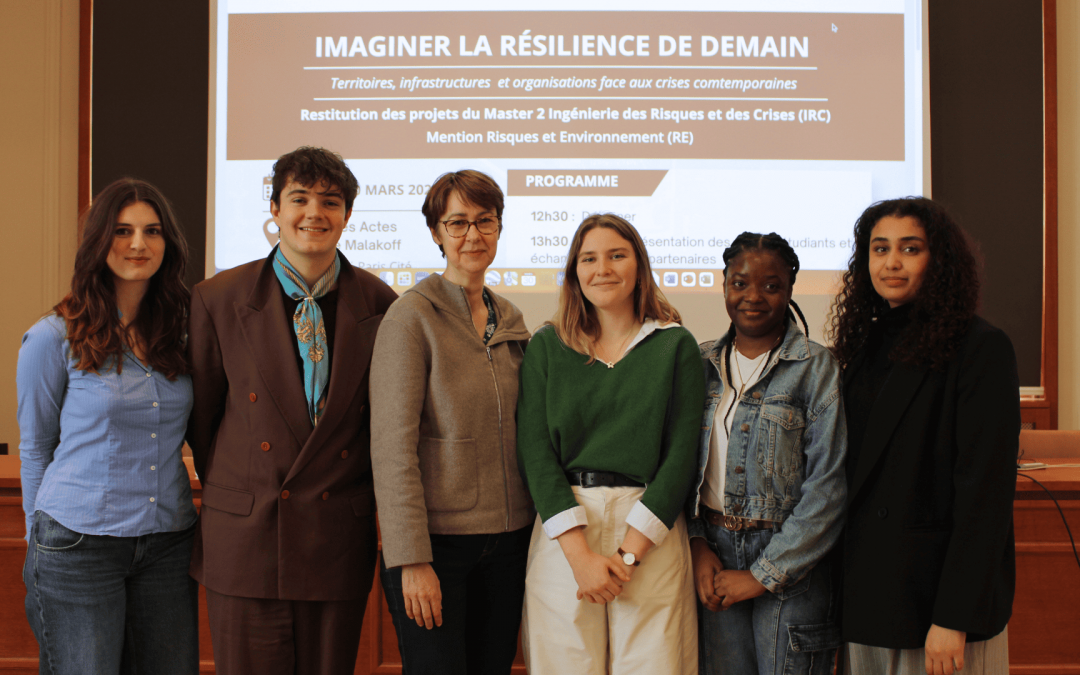
Imagining Tomorrow’s Resilience: Projects by the 2026 Cohort of the Master’s in Risk and Crisis Engineering
On Monday, March 31, students from the Master’s program in Risk and Crisis Engineering (IRC), part of the Graduate School Sustainability & Transitions, presented the results of several months of work carried out at the request of the Graduate School’s partners on the theme: “Imagining the resilience of tomorrow: territories, infrastructures, and organizations facing contemporary crises.” Lire la suite Imagining Tomorrow’s Resilience: Projects by the 2026 Cohort of the Master’s in Risk and Crisis Engineering
read more![[FIRE Call for applications] Meet our PhD students FIRE!](https://www-test.u-pariscite.fr/wp-content/uploads/2026/04/Sans-titre-1920-x-1080-px111-1080x675.png)
[FIRE Call for applications] Meet our PhD students FIRE!
The Frontières de l’Innovation en Recherche et Éducation (FIRE) Doctoral School is an international and interdisciplinary PhD program accredited by the Université Paris Cité (UPCité) and co-accredited by the Université Paris Sciences et Lettres (PSL).
FIRE welcomes students who are passionate about contributing to Planetary Health and the implementation of the Sustainable Development Goals (SDGs). It hosts research projects that often fall outside the scope of traditional doctoral schools due to their unconventional and cross-disciplinary nature. We interviewed three of our PhD students, who shared their thesis topics, explained why they chose the FIRE doctoral school, and offered advice for the next cohort. Lire la suite [FIRE Call for applications] Meet our PhD students FIRE!

March 8: Université Paris Cité is committed to women’s rights
On International Women's Day, Université Paris Cité reaffirms its commitment to gender equality, women's health and the fight against all forms of violence, harassment and discrimination. March 8 is a key date, but our commitment is ongoing. Supporting female...
read more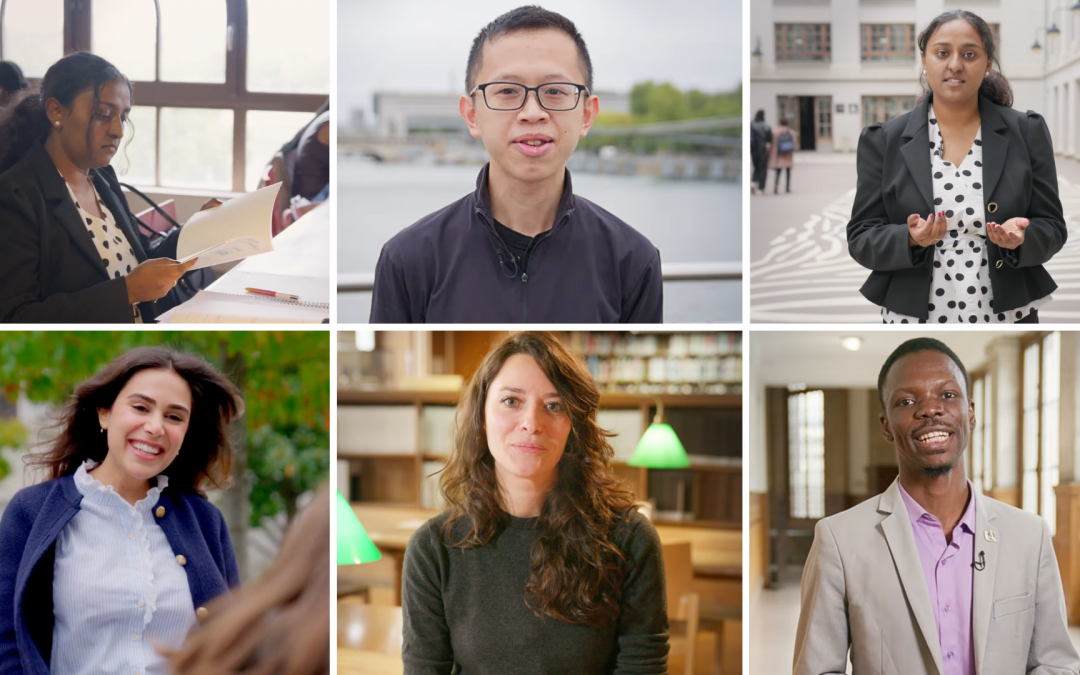
A successful first review for UPCité’s Graduate Schools!
Five years after their launch, the University’s Graduate Schools are reporting a very positive initial assessment. A true strategic lever for the University, the Graduate Schools offer master’s and doctoral programmes centred on transdisciplinary research and strongly...
read more